Dust, exhaustion and vintage
L'eroica
Date:2014Location:Gaiole in Chianti (Italy)
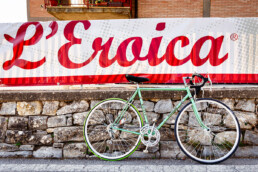
L'Eroica vintage cycling draws hundreds of riders to Gaiole in Chianti, a municipality of fewer than three thousand residents north of Siena, for the international cyclo-touring event founded in 1997 to preserve the material heritage and historical memory of pre-1987 bicycles.
The event, which takes place during the first weekend of October, rejects the logic of competitive racing and features no final standings, operating instead as a grueling test of physical endurance and a gathering of historical collectors.
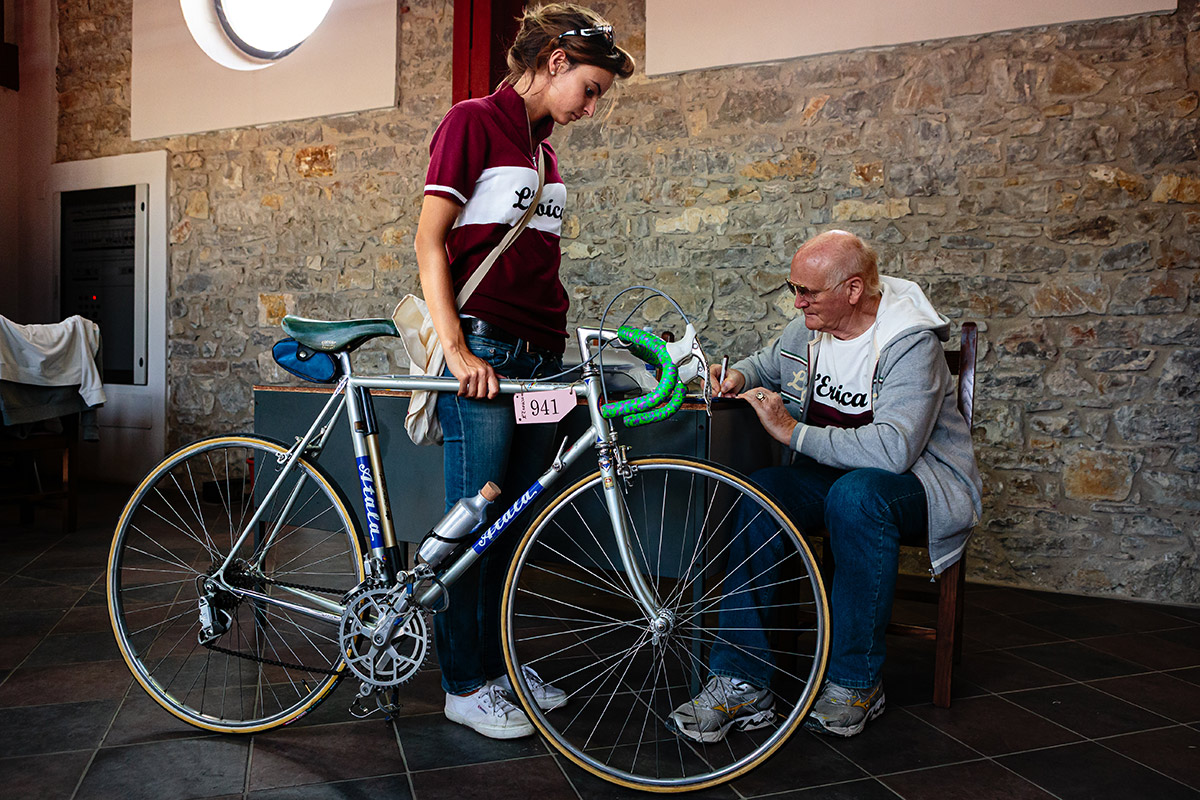
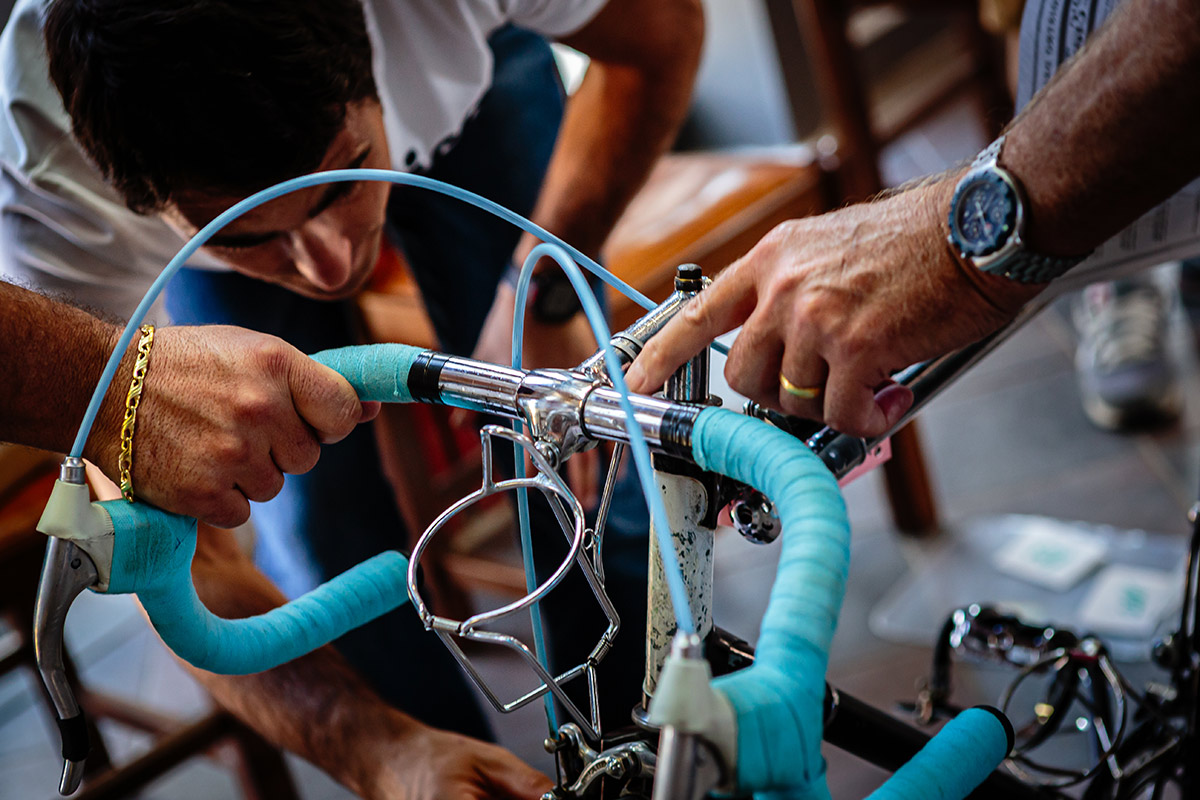
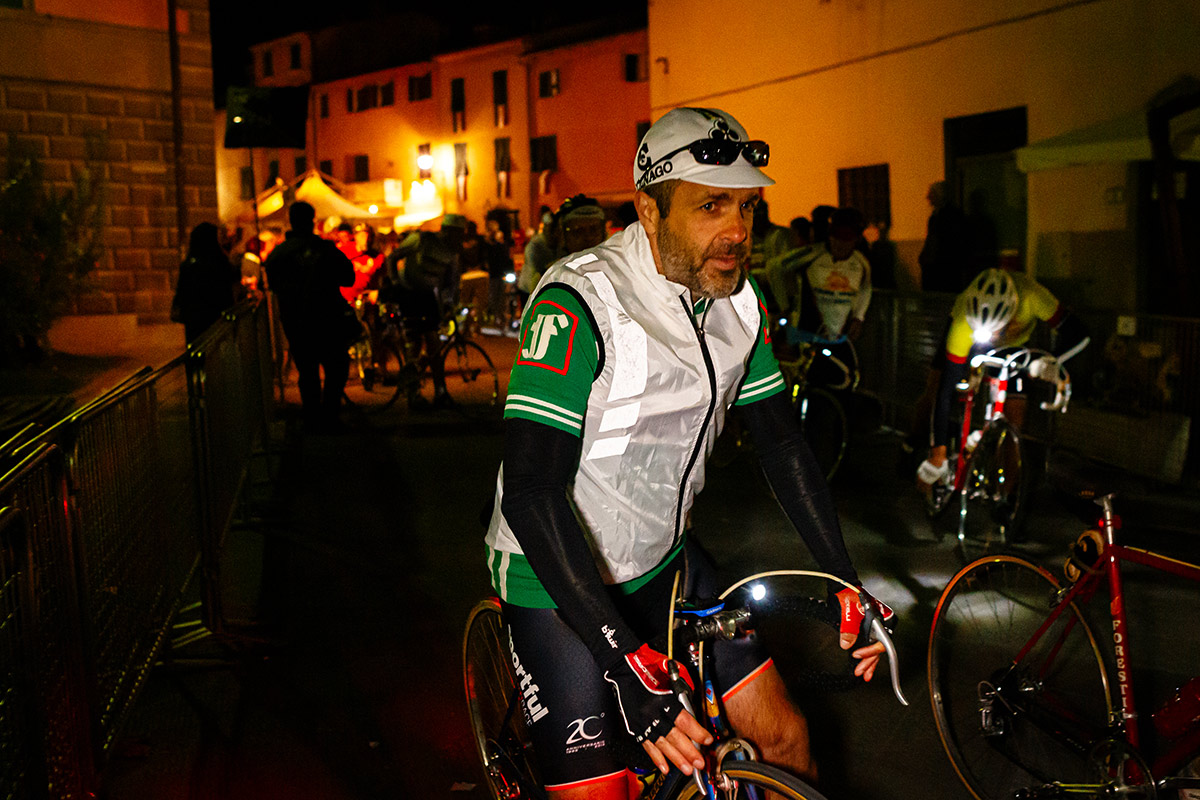
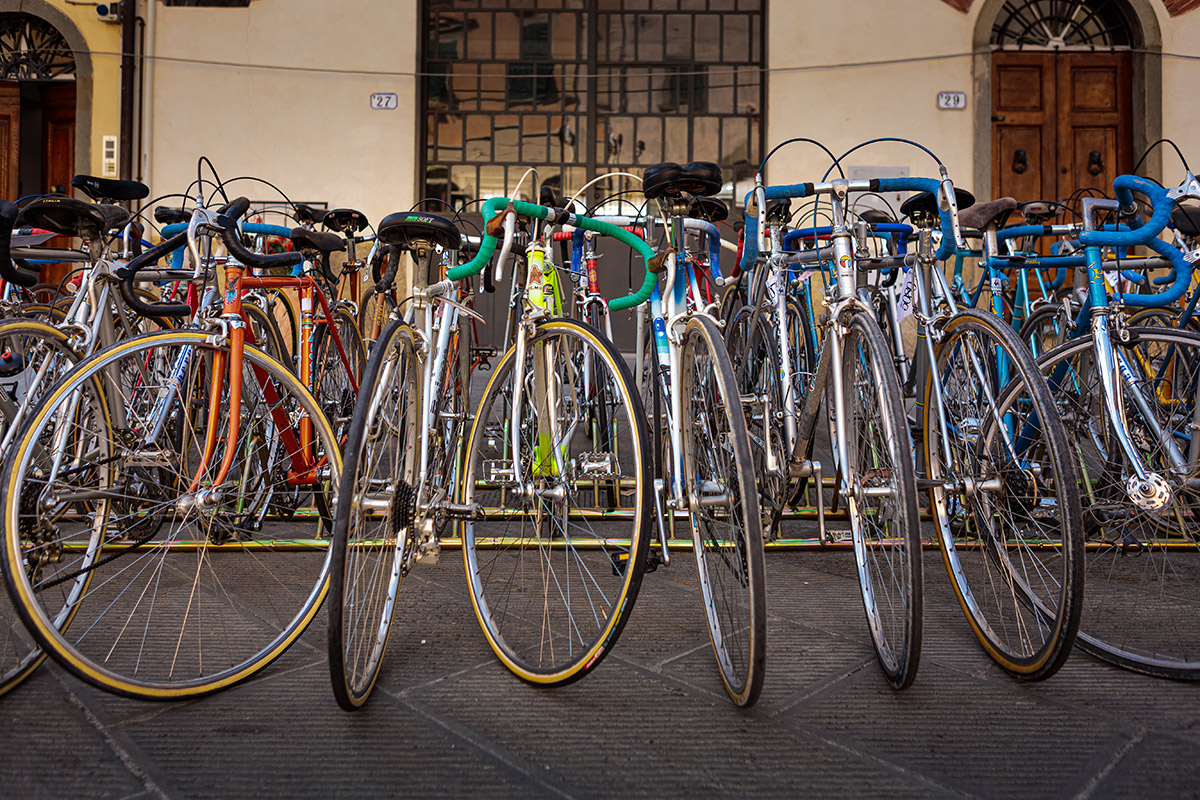
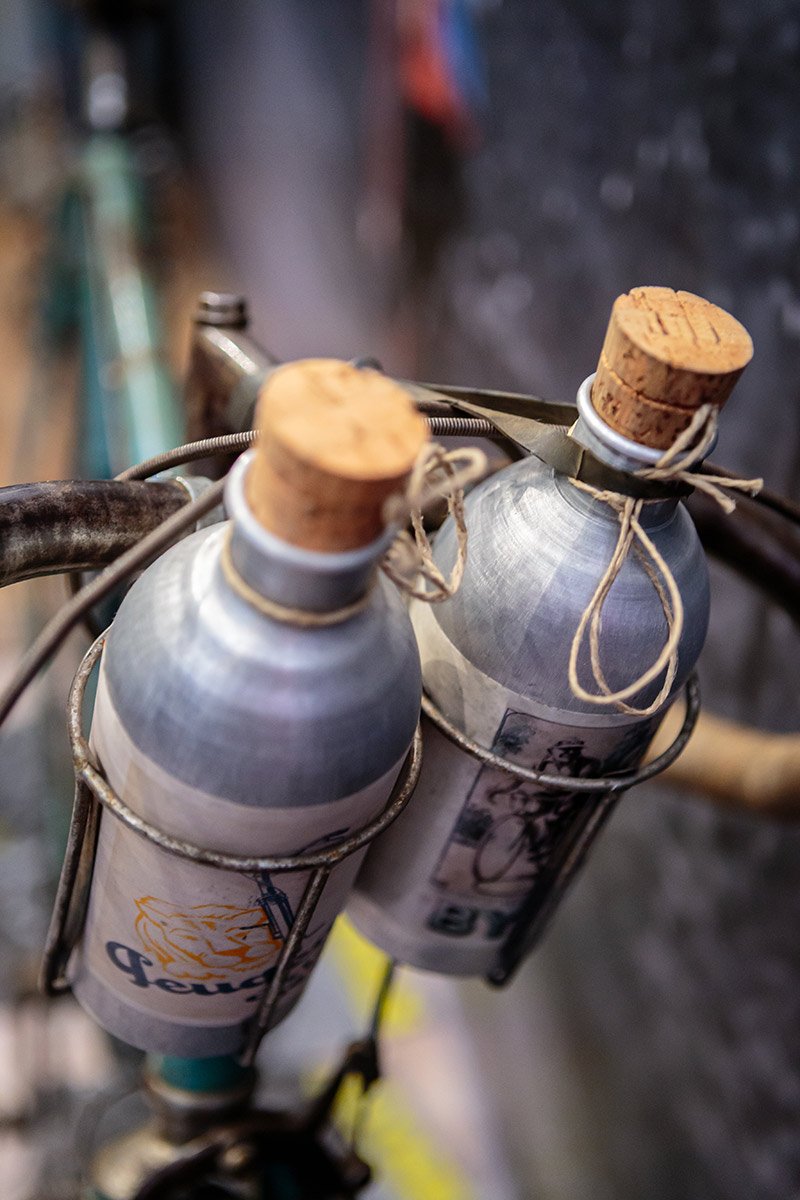
The technical regulations impose extremely rigid admission requirements: bicycles, defined as "heroic", must have been built before 1987, feature a steel frame, gear shift levers positioned on the down tube, pedals equipped with toe clips and straps, and brake cables routed externally to the handlebars.
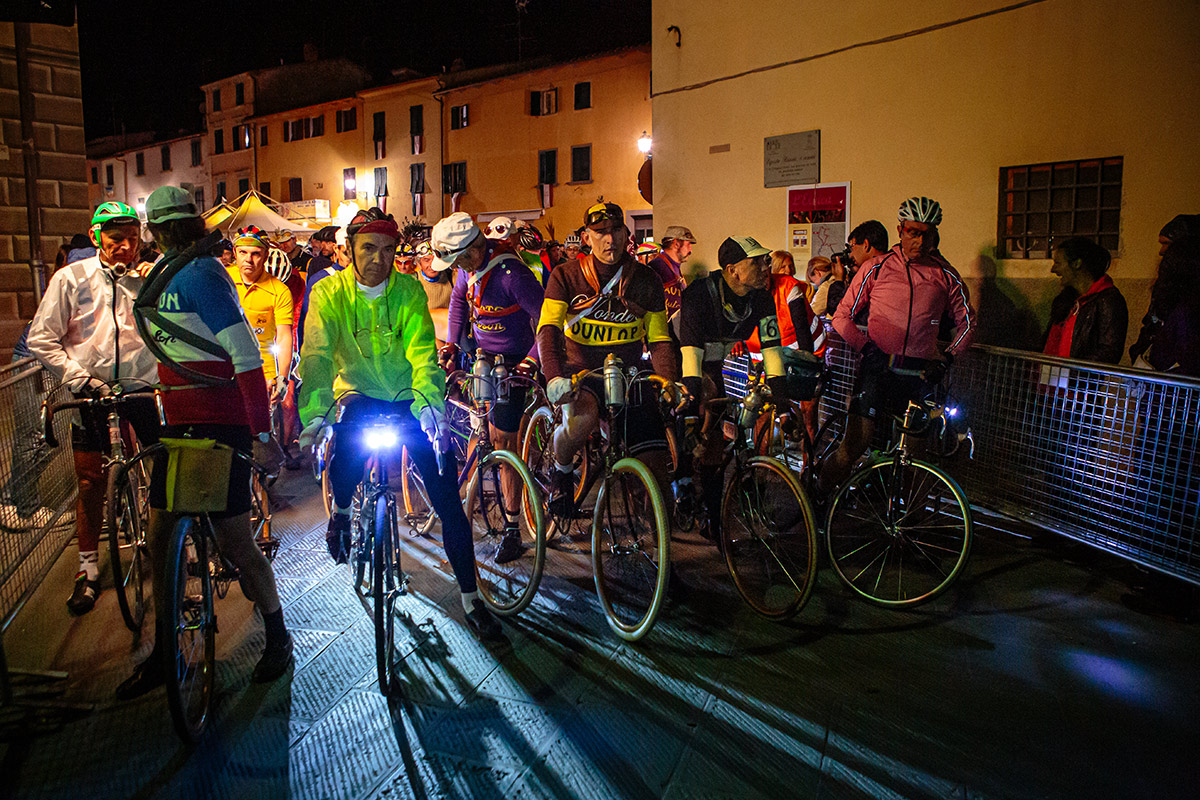
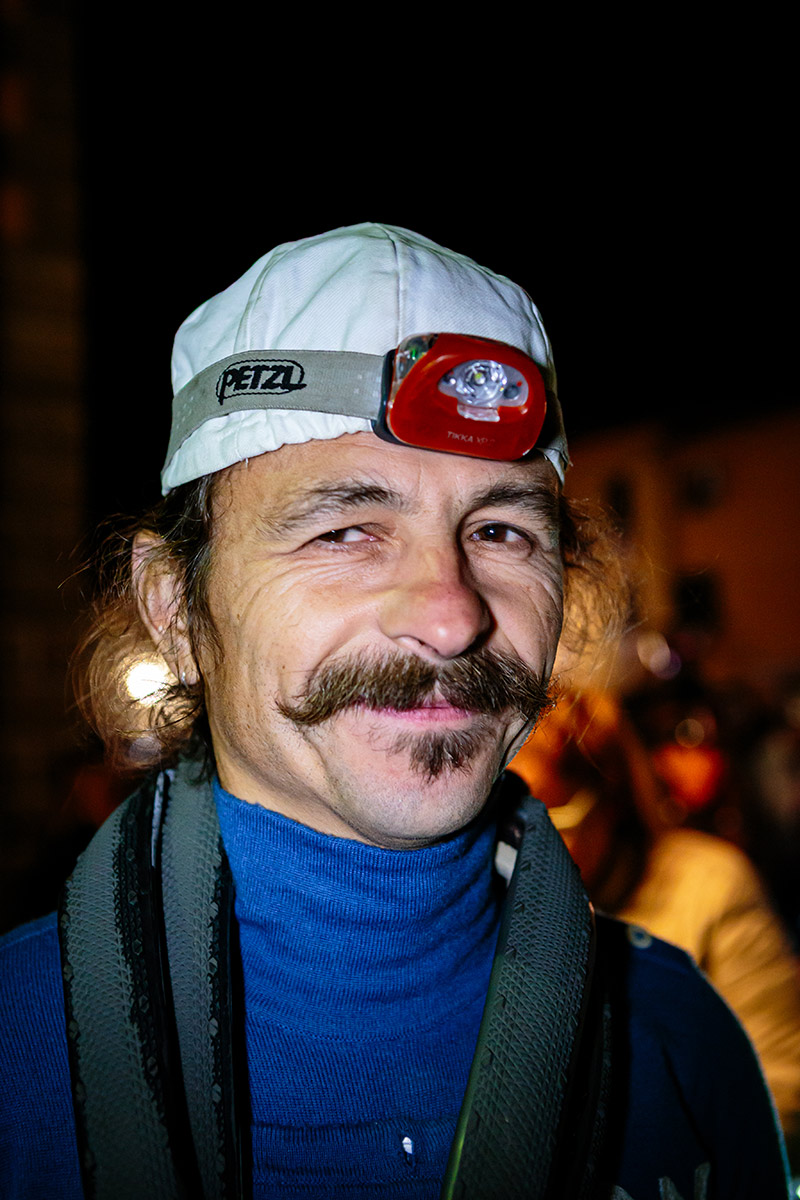
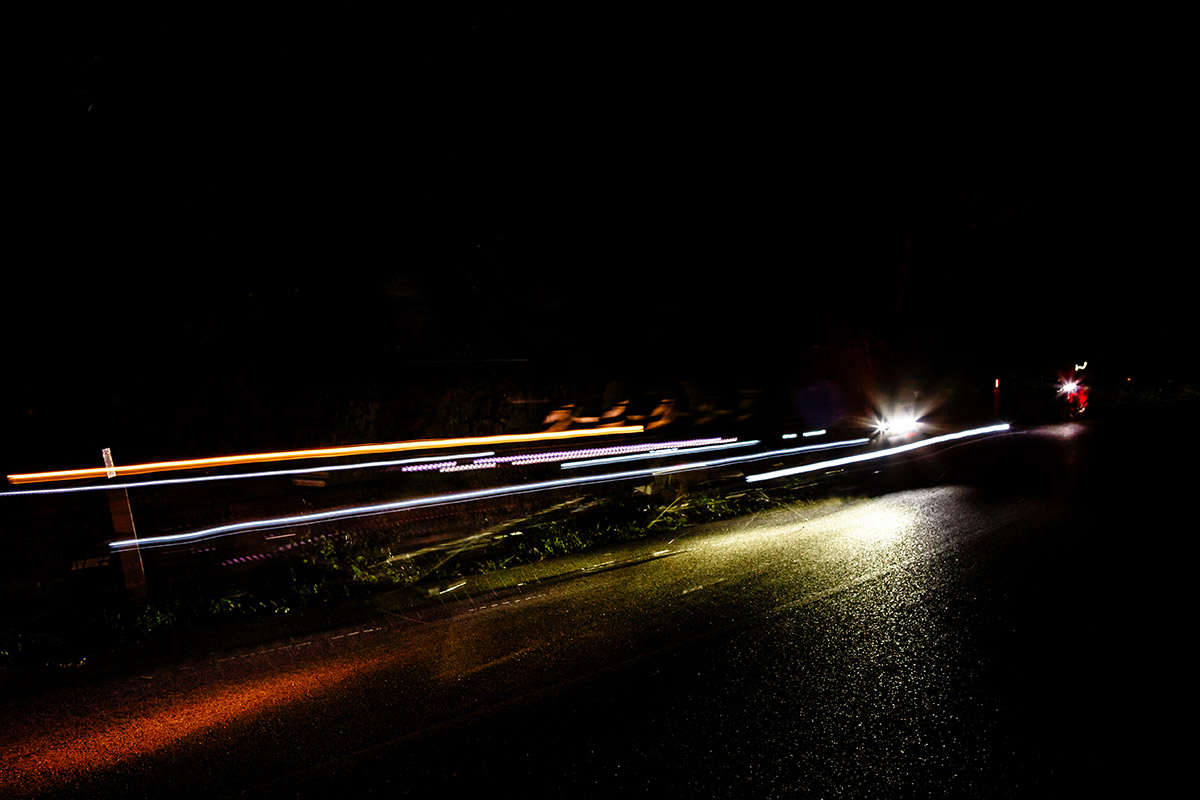
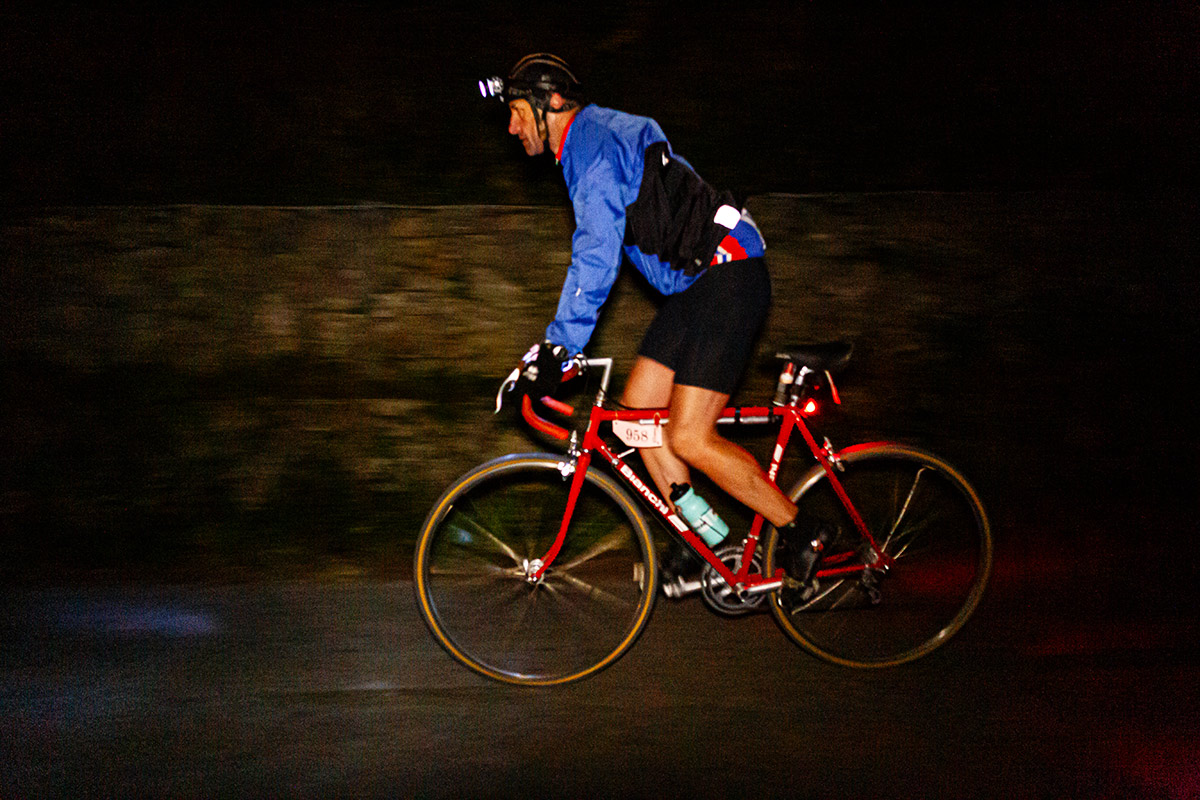
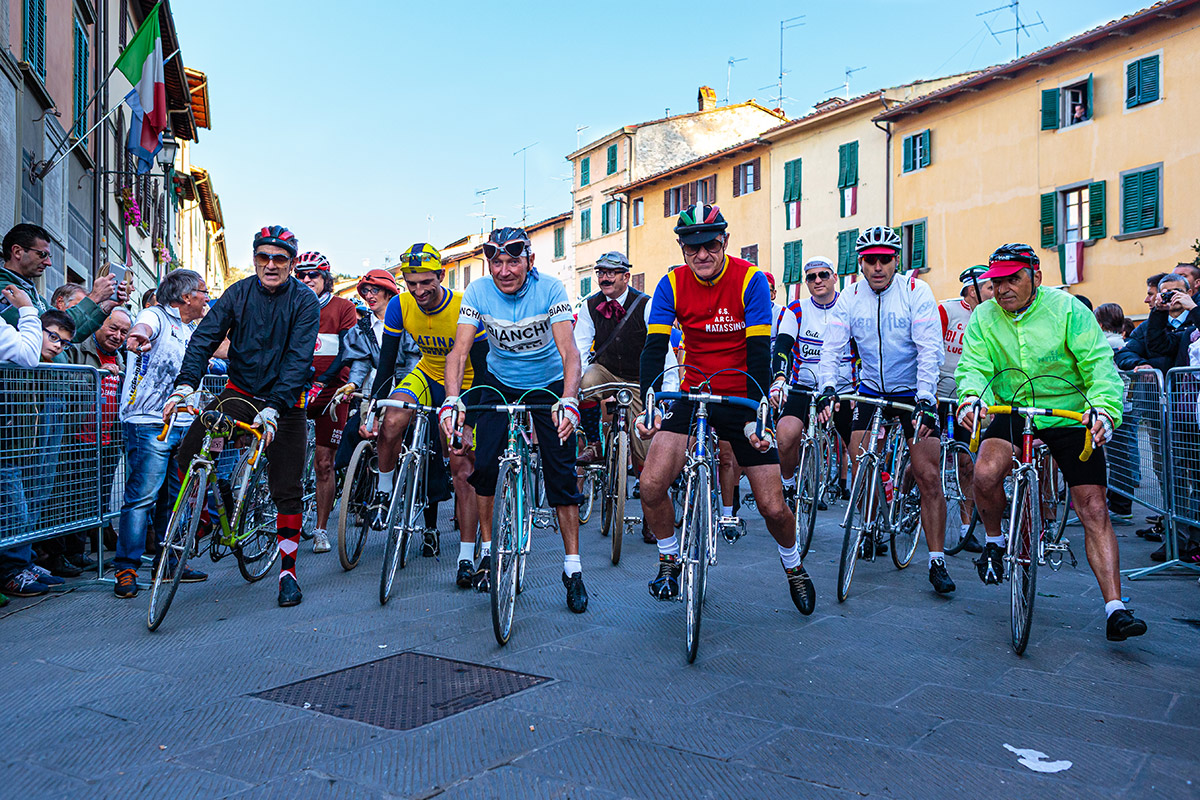
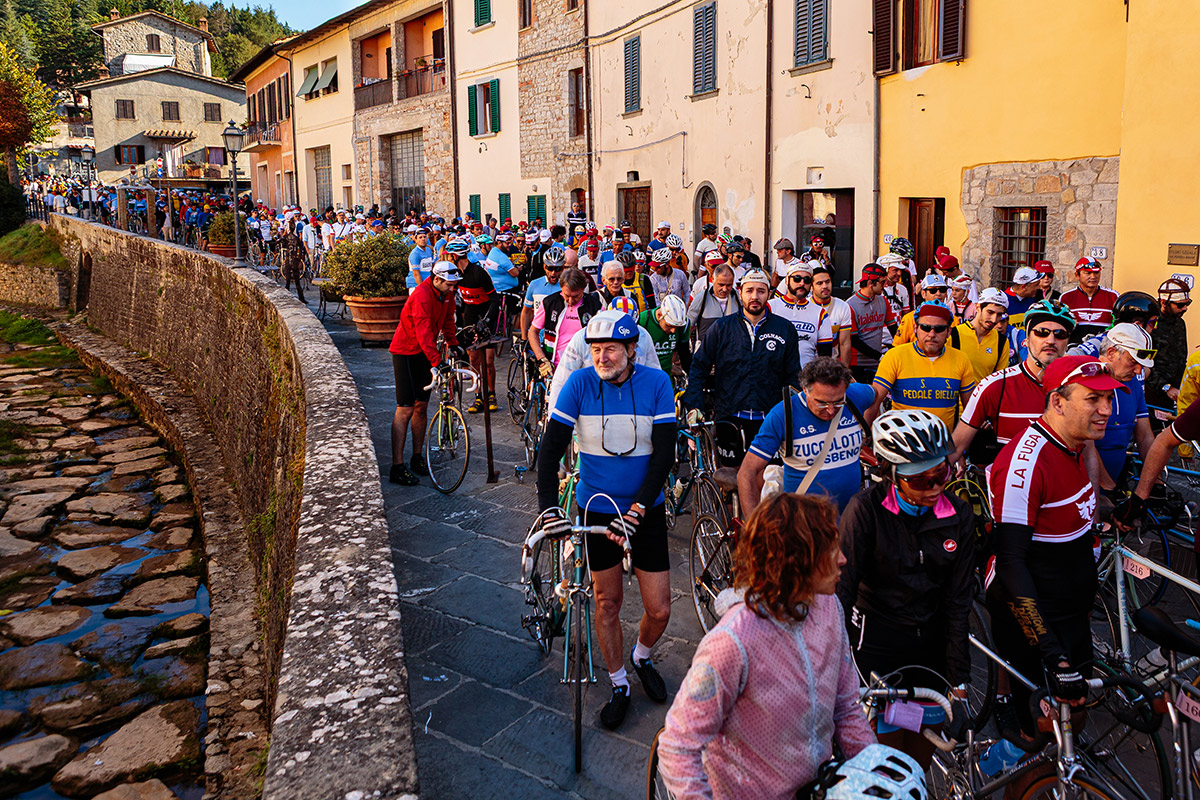
The verification and scrutineering session for the bicycles engages marshals throughout the Saturday, anticipating the Sunday departure which takes place in the town centre at 05:00, in total darkness, intense cold, and before a limited circle of spectators and family members.
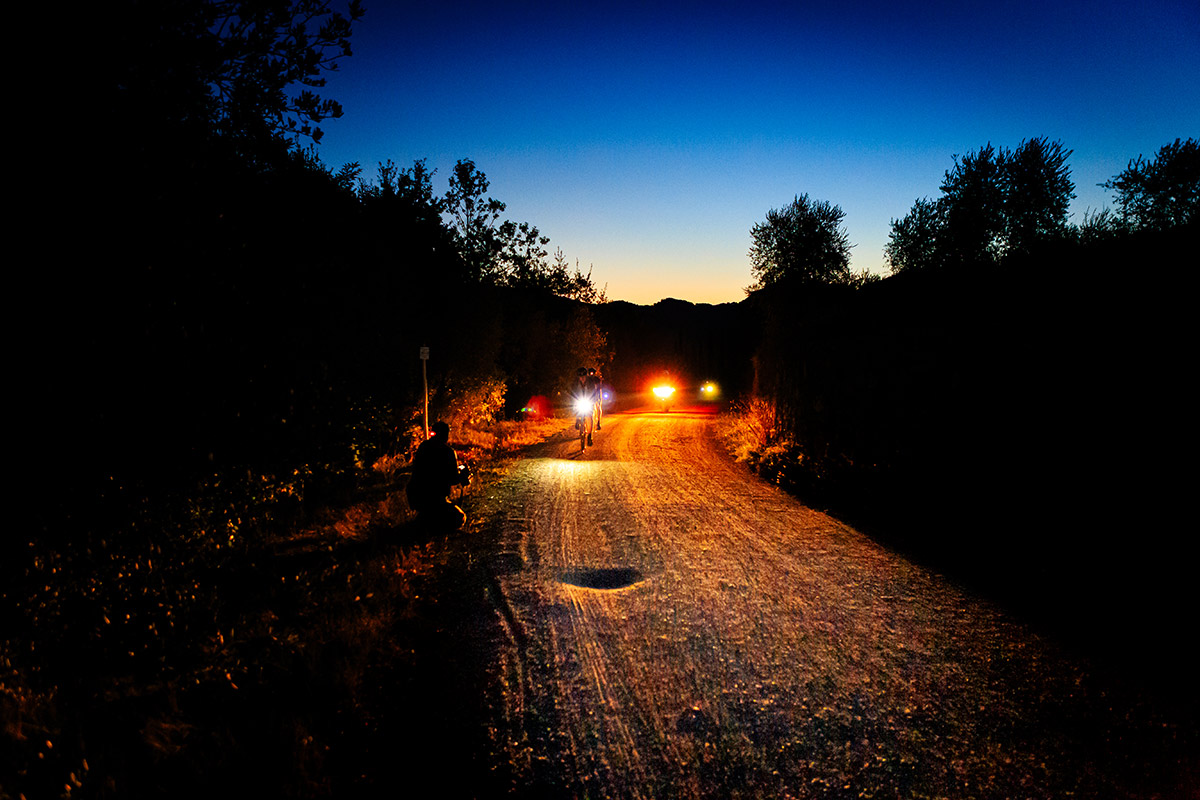
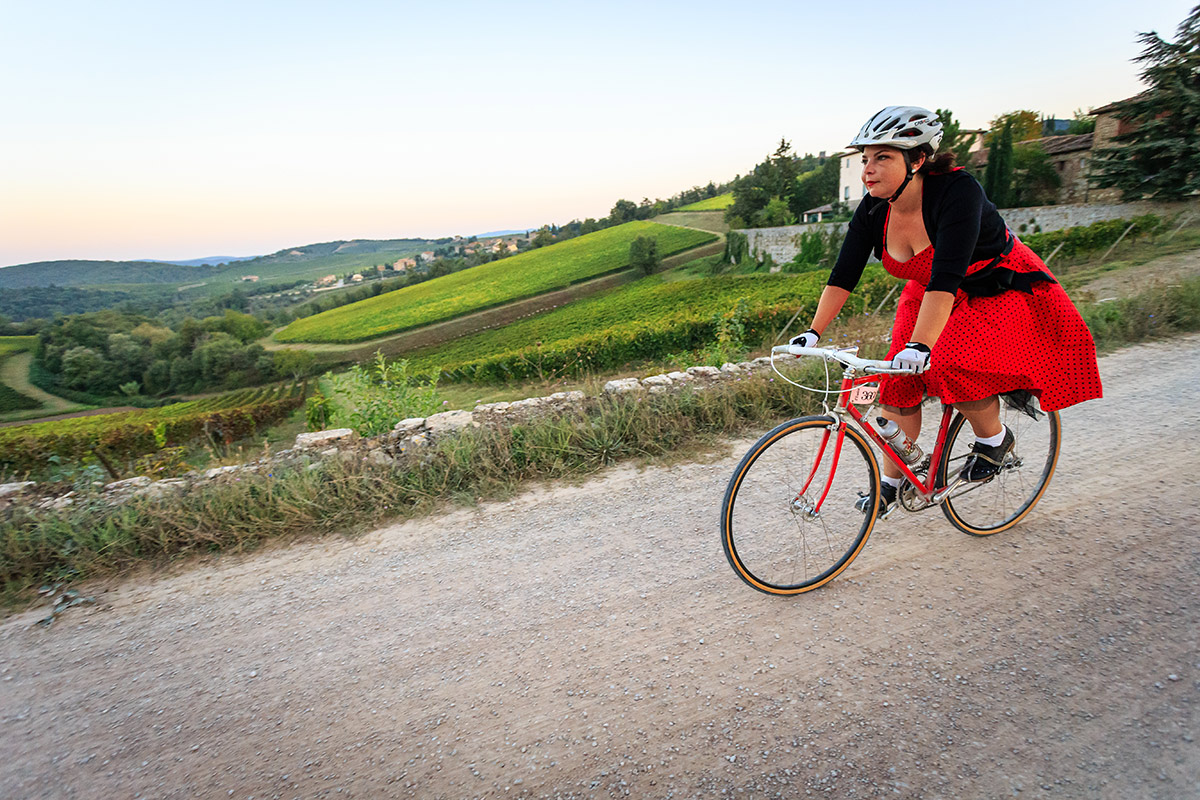
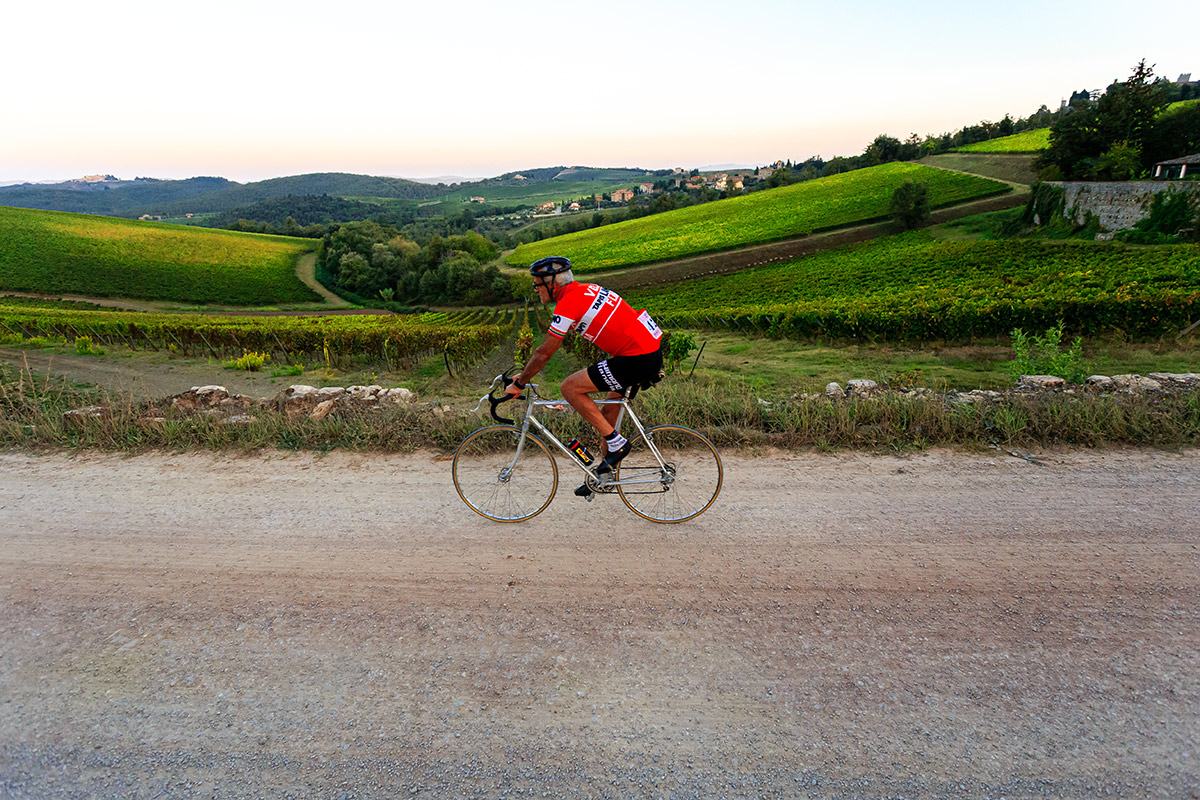
Those who select the longest and most selective route of 209 kilometres are obliged to ride with artificial lamps and self-sufficient repair tools, tackling the gravel of the strade bianche and the ascent towards the Castello di Brolio, before the first light of dawn reveals the skyline of Siena on the horizon.
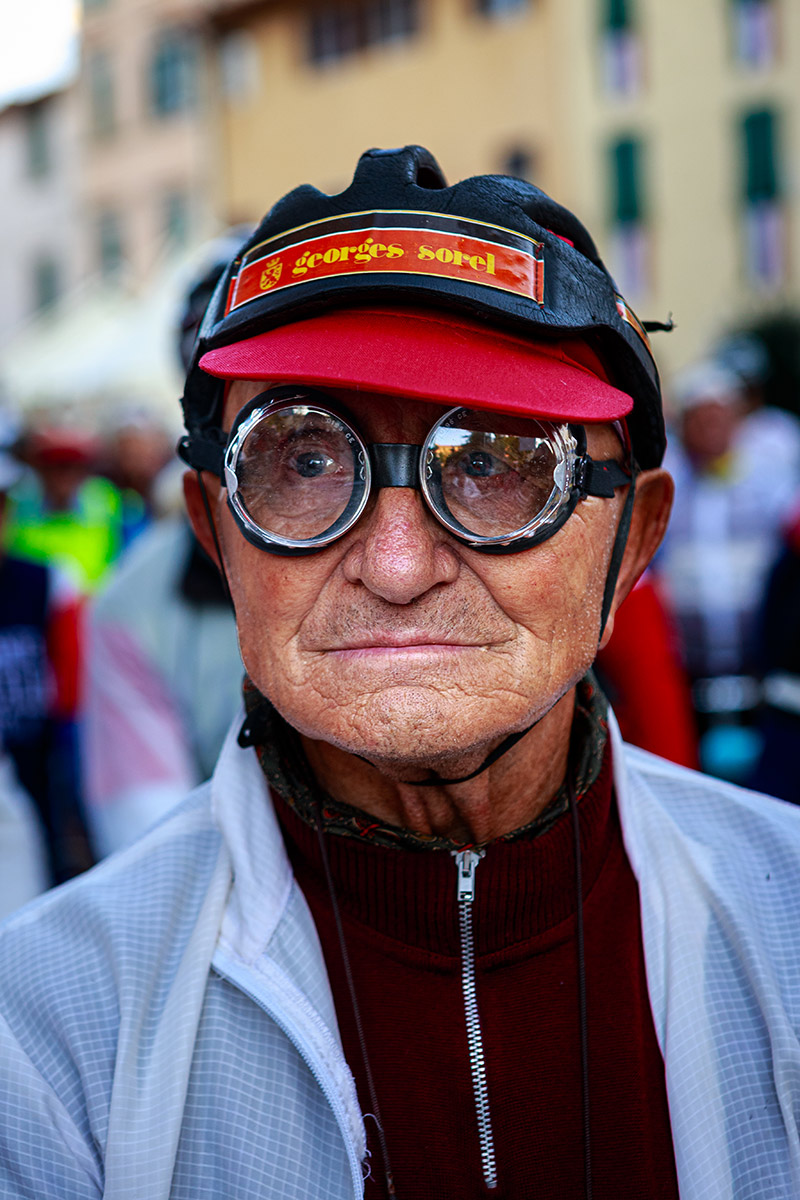
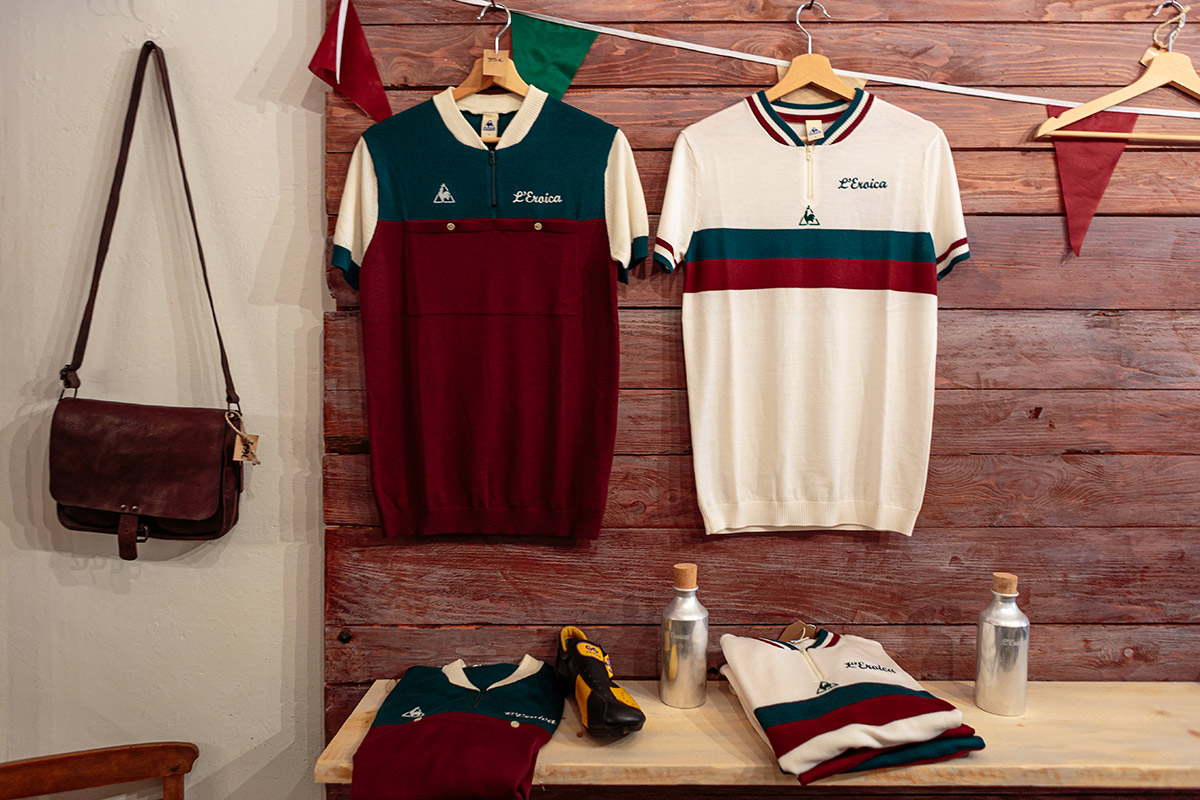
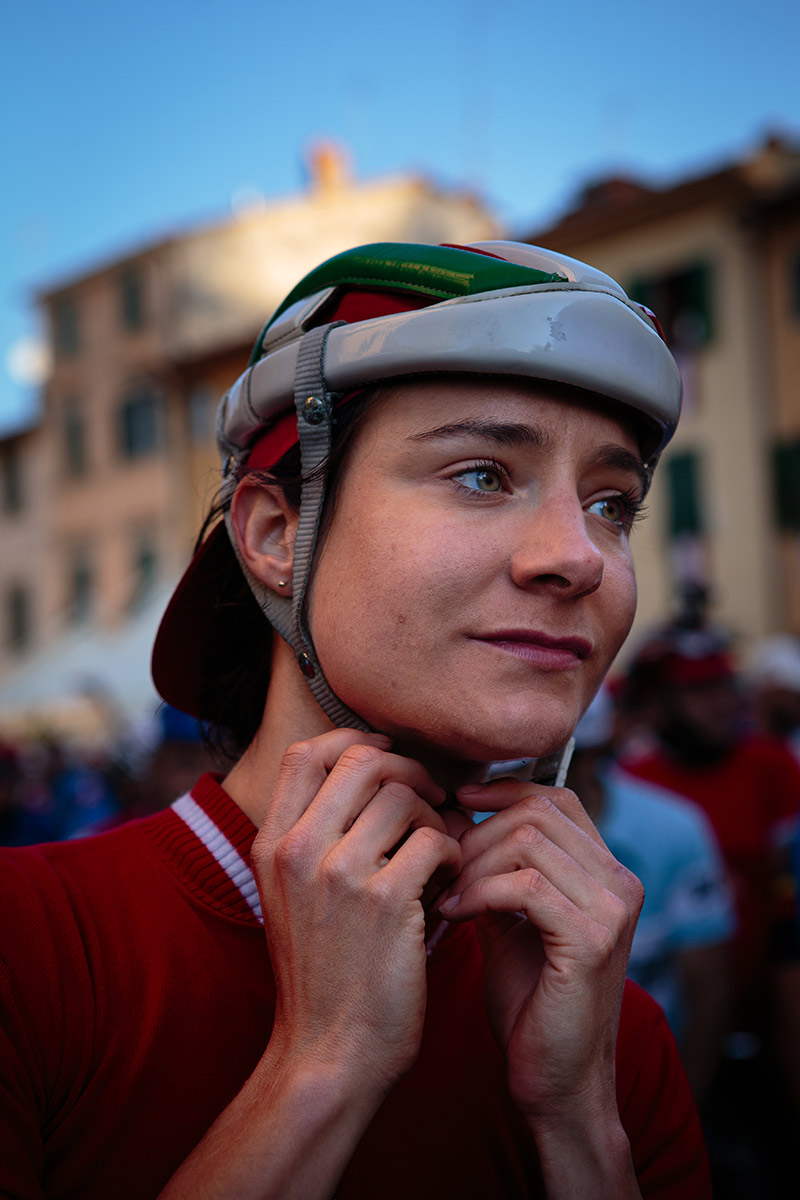
Alongside the enthusiasts who choose shorter routes with the sun already up—among whom major figures from world professional cycling are often recorded, such as the Dutch champion Marianne Vos—the parade of participants displays technical relics from the early 20th century with single-speed ratios, which force the rider to remove the rear wheel and flip it over to change gear, interspersed with cyclists in woollen jerseys and bow ties from the 1930s riding historic Bottecchia or Legnano frames, visually documenting the technological and anthropological evolution of a sport built on physical sacrifice and dust.
The Man Who Saved the Strade Bianche
L'Eroica was born in 1997 from an idea by Giancarlo Brocci, a local food and wine writer who had watched the gravel strade bianche of the Chianti hills disappear under asphalt, road after road, for years. Concerned that the region's connective tissue of white roads was vanishing along with the slower rhythm of life built around them, Brocci gathered a small group of enthusiasts willing to ride the surviving unpaved routes on the bicycles that had first travelled them: steel-framed machines from before 1987, with down-tube shifters, toe-clip pedals and no relation to the carbon-fibre bikes of modern professional cycling.
What started as a local act of preservation quickly outgrew Tuscany. The event's refusal of competitive logic — no winners, no times, no podium — became its defining feature, drawing collectors, amateurs and professional riders alike who wanted to experience cycling stripped of performance metrics. L'Eroica has since inspired more than thirty sister editions across four continents, from California's Central Coast to Japan and South Africa, each one adapting the same formula: old roads, old bicycles, and an unhurried pace that has become, in its own way, a form of protest against the acceleration of contemporary sport. The strade bianche that Brocci set out to save are today protected by regional law, a rare case of a cycling event directly shaping Tuscan land-use policy, while hotels and agriturismi across Gaiole, Radda and Castellina in Chianti now book out a year in advance for Eroica weekend.